Learning Resources, Uncategorized

Gear Up for 2024: Make sure you have the right mindset

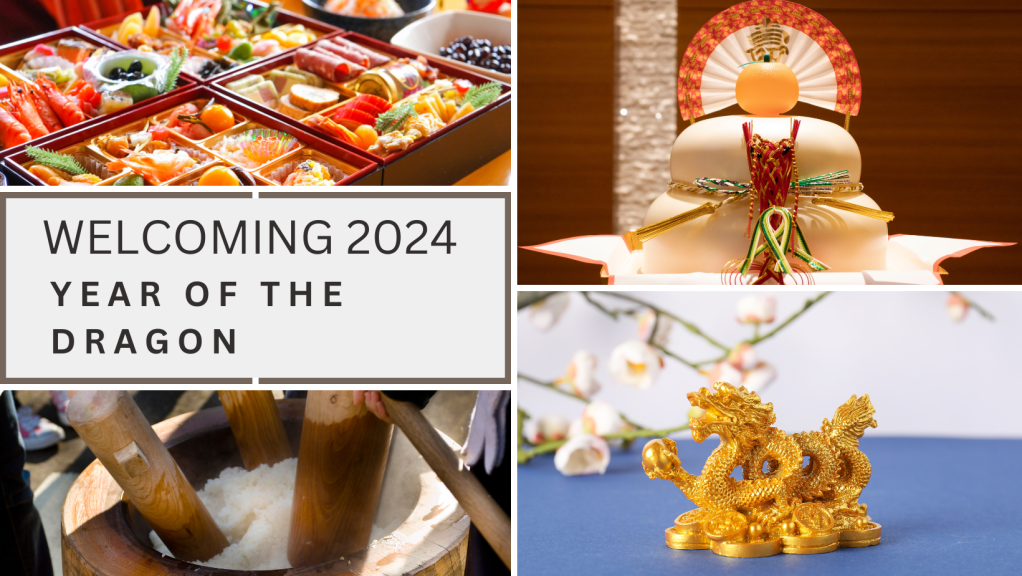
The Christmas festivities have ended and we are approaching the Year of the Dragon 2024. Do you know about the Chinese Zodiac year? It’s a 12-year circle represented by 12 animals from rat to pig. Japan also follows this culture and New Year, shougatsu in Japanese, or very commonly called oshougatsu(お正月(しょうがつ))is a serious business! People are busy with the traditions and various preparation in welcoming the big day (here is an article that provides a detailed description of the culture.”). In Japan, around the end of the year, you can find New Year’s greeting cards called nengajou ((ねん)賀状(がじょう))and other items related to New Year’s festivities being sold in post offices, supermarkets, or many other stores according to the zodiac of the respective year. New Year’s decorations are everywhere and needless to say, we are surrounded by dragons wherever we go these days!

Personally, I absolutely adore dragons, and they are considered a symbol of power, strength, and good fortune. I understand that not everyone shares the same cultural beliefs or lives in Japan or China. However, I believe that the qualities of the dragon can inspire and guide anyone in pursuing personal development and achieving their goals. Here are some of the good qualities of the dragon that I personally find inspiring:

Strength and Tenacity:

Dragons are known for their strength and tenacity. Use these qualities to face challenges with resilience and determination. Stay committed to your goals even in the face of difficulties.

Ambition and Leadership:

Dragons are natural leaders. Set bold goals and take charge of your own destiny. Be confident in leading others toward success.

Wisdom and Intelligence:

Dragons symbolize wisdom and intelligence. To achieve success, cultivate a continuous learning mindset, seek knowledge, and make informed decisions.

Good Fortune and Prosperity:

Dragons are considered symbols of good fortune and prosperity. It’s believed that approaching your goals with a positive mindset, visualizing success, and believing in the abundance of opportunities that lie ahead can lead to a successful outcome.

Fearlessness:

Dragons are depicted as fearless creatures. Approach your goals with courage and don’t be afraid to step out of your comfort zone to achieve greatness.

Guardianship:

Dragons are often regarded as protectors. You too can safeguard your aspirations and objectives, ensuring their well-being and nurturing them with care and attention.

Energetic Enthusiasm:

Dragons are known for their energy and enthusiasm. Infuse your actions with passion and excitement, and let the vibrant energy of the dragon inspire your journey toward success.

By allowing the qualities above to guide your actions and aspirations, you’ll gain inspiration and strength from their symbolism, and create a path to success that is both fulfilling and rewarding. So why not give it a shot and see the positive impact it can have on your life?

Thank you for taking the time to join me on this exploration of the Year of the Dragon and the positive qualities we can embrace to ensure a successful journey ahead. It is crucial that we equip ourselves with the right attitude, determination, and positivity in order to achieve our goals. So, let’s strive for excellence and embrace these qualities to make the most of this year.

If you are a Japanese learner or interested in the Japanese language, feel free to download Tanpopo’s free printable below containing words and phrases related to New Year’s traditions and events.

Wishing you a year filled with joy, prosperity, and the fulfillment of all your aspirations. 良いお年を (yoi otoshi o!)
Uncategorized

初心者向けのインドネシア語クイズです!

皆さん、こんにちは!

静岡は今日も晴れて、11月と思えないほど暖かいです。いかがお過ごしでしょうか? インドネシア語の勉強は順調ですか? それとも、最近新しいことに挑戦しましたか?

さて、今日は初心者向けの楽しいインドネシア語クイズを用意しました! よかったら、挑戦してみてくださいね。答えも用意してありますので、クイズの後に確認してみてください。

それでは、楽しい学習の時間をお過ごしください! ✨

下記の単語をインドネシア語に訳してください。

  1. こんにちは
  2. ありがとう
  3. 食べる
  4. 食べたい
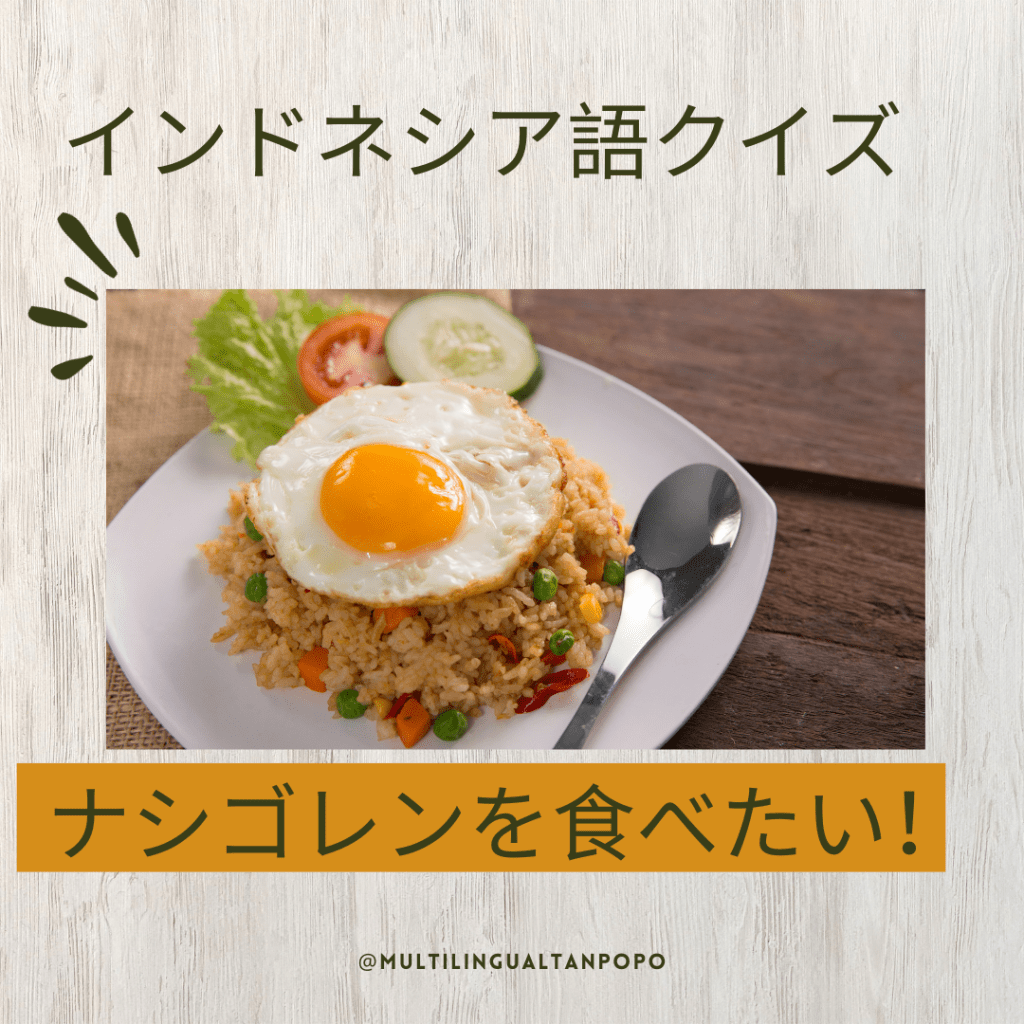
  5. ナシゴレンを食べたい

答え:

  1. Selamat siang
  2. Terimakasih
  3. Makan
  4. (Saya) Mau makan
  5. (Saya) Mau makan nasi goreng
Uncategorized

My Journey to Fluency in Japanese: A Fusion of Language, Culture, and Friendship

Hey there!

Around two decades ago, I took the opportunity to dive into the captivating world of Japanese. I landed in a full-time Japanese preparatory school in Kuala Lumpur, Malaysia, soaking up the language and culture like a sponge. It wasn’t just about mastering grammar and vocabulary; it was a dynamic journey beyond textbooks.

Picture this: eight hours a day, Monday to Friday, dedicated to mastering Japanese for 14 months. Kanji quiz was the first task we had every single morning before diving into new lessons. Challenging? Absolutely! I’m not exaggerating when I say that I’ve never studied that intensely in my life! But it was a testament to the commitment to learning a language from scratch. And guess what? Looking at what I’ve accomplished and where I’m now, it was definitely worth every moment.

My fantastic classmates were from various ASEAN countries. We created a mini–United Nations within our Japanese language education, sharing ideas or stories of our homelands, traditions, and customs, in English and Japanese. Imagine that!

Studying alongside peers with different expertise opened up a world beyond textbooks. From engineering to history, attending their presentations and engaging in daily chats broadened my horizons.

We started in English, our common ground. However, as we progressed in our Japanese studies, our conversations naturally switched to Japanese. It was a powerful shift, showcasing the magic of immersive learning and our shared determination to embrace the Japanese language fully.

None of this journey would’ve been possible without my incredible Japanese teachers. Shoutout to them for their guidance, endless patience, and dedication in shaping our language skills and fostering a love for Japanese.

I’m still on my learning journey, consistently honing my skills and occasionally revisiting grammar and Kanji, which always fascinates me with its countless wonders.

Now, as an online Japanese tutor, it’s my mission to guide you on the thrilling journey of mastering Japanese that will benefit your career, studies, and everyday life. Now, are you ready to embark on this language journey together?

Drop me a message, sign up for my online trial classes, and let’s explore the world of Japanese together!

💌 Connect with me on YouTube and Facebook @multilingualtanpopo, Instagram @multilingual_tanpopo, or reach out on WhatsApp +81-80-2820-0107. Let’s make your language adventure remarkable together! 🌟

Uncategorized

Check out my new YouTube channel!

Hi there! I hope you are having a wonderful week!

It’s been a while since my last post and now I’m back with some updates.

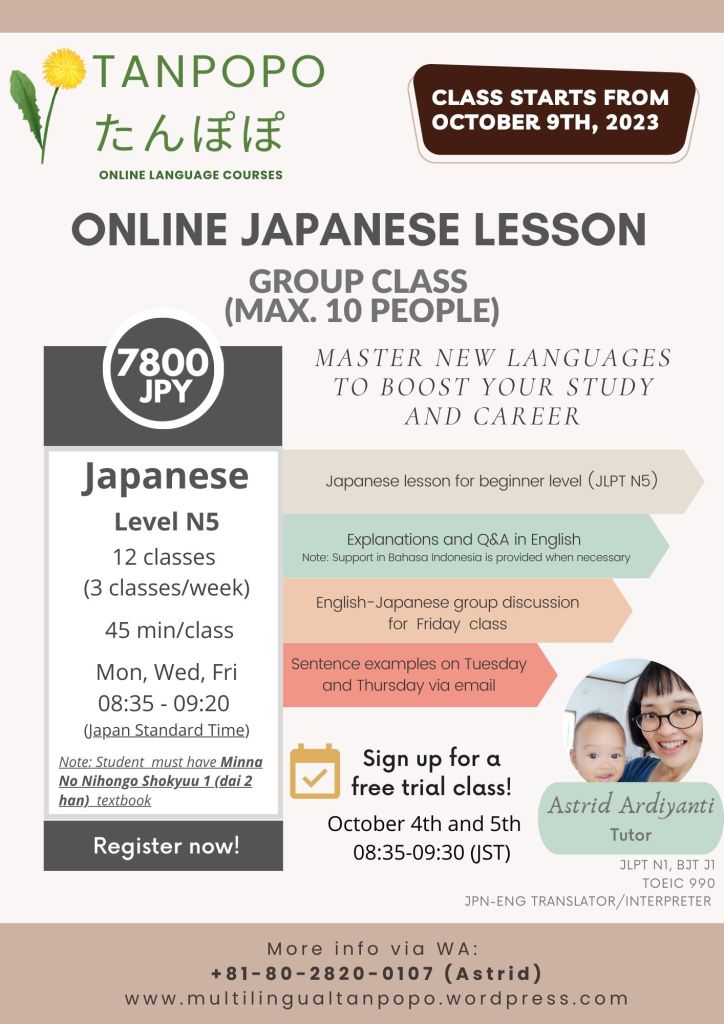
A few months ago, I opened my Tanpopo classes with a mission to help those who just started their journey to learn Japanese, English, or Indonesian languages.

With this in mind, last week I created a YouTube channel @multilingual_tanpopo and started posting videos on YouTube. I’m a complete beginner in creating and posting videos, so I only use Canva and PowerPoint as my tools at the moment, but I hope to get better in the future.

If you’re a beginner in Japanese, try watch these videos and see if you can learn something new there or simply review your understanding. Each video is less than 7 minutes , so it won’t take much of your time and I hope you enjoy watching or listening to it!

Kanji for beginners 一 (1, one)

Kanji for beginners 二(2, two)

How to improve your Hiragana and Katakana reading skills

I’m still creating more and more videos (while practicing my English and public speaking skills altogether, haha!), so let me know if you have any requests!

See you there!

Astrid

Uncategorized

Accent is not a problem.

When you speak a language as a non-native speaker, are you worried about your accent?

Do you always hesitate to speak that language because you think you’ll sound weird?

I have some perspective for you, but let me share my story first. So, bear with me here.

I’ve worked as a Japanese-English translator and interpreter in an automotive Japanese company for six years. Due to the nature of my work, I used to observe how people from various countries, including Japanese people, speak in English and Japanese. Many years before that, I attended a Japanese language preparatory school for 14 months, studying intensively in groups with students from different countries. Even though Japanese was the only language permitted in the classes, we still communicated in English during our private time. So, taking all these experiences together, I’m pretty much familiar with accents other than those of Japanese and Indonesian, especially Malaysian/Singaporean, Indian, Chinese, Thai, Vietnamese, and Italian. (Did I mention British accent? LOVE it.)

As an interpreter, I had to pay close attention to the speaker’s speech. Listening, taking notes, grasping the content/information, and rendering it to the target language is the main flow of my task, which I had to do within seconds. After years of doing this, here’s my conclusion/advice:

Accent indeed matters, BUT (!), your very basic English skills matter most.

And what do I mean by that?

Here’s an example:

There’s Jerry from Country A and Tom from Country B.

They speak English at work as their second language.

Jerry has quite good English pronunciation but not so well in basic grammar.

Tom, on the other hand, speaks English like a native.

Tom: Hi Jerry, can you email me last year’s sales report today?

Jerry1 (without accent): Oh sorry. I, no report. Tell Clara, she too, don’t know.

Now let’s stop here.

Imagine Jerry saying every single word perfectly and very clearly, with no accent of his first language whatsoever.

Now, let’s bring in another imaginary Jerry below who has quite a strong accent (choose your favorite accent).

Jerry2 (with accent): Oh, sorry. I don’t have it. I ask Clara. Yesterday. She don’t have. I will check again. I will email you.

Or this Jerry, still with an accent, AND this time, better grammar.

Jerry3 (with accent): Oh, I’m sorry, I don’t have it. Actually, I asked Clara yesterday, but she doesn’t have it either. Let me check with others and update you soon.  

Remember. The basic purpose of speaking in a language is to communicate.

I hope the (exaggerated) examples above help you get the idea of why an accent isn’t important as long as the listener understands your speech. In fact, minor grammatical errors are fine too as long as they do not confuse the listener (or reader). Dare I say, losing your accent is NEVER the point.

If you still need proof, go watch and listen to TED talks or whatever speeches in English by non-English native speakers who have powerful impacts in our society. Notice their accents AND (this is crucial) notice too how well you understand the content of their speeches.

Having said that, I still encourage you to keep practicing your pronunciation because it will help people understand you, but first and foremost, focusing on building a solid grammar and vocabulary foundation will bring your language skills to a completely different level.

Now, do I have an accent?

Of course! If you hear me speaking in English, you’ll notice right away that I’m not a native speaker.

Do I still make mistakes?

Y-E-S. I’m a normal human being in the process of a lifelong language-learning journey.

(And so are you, if you haven’t noticed.)

My future post will be about the fear of making mistakes, but for now, take this:

take advantage of mistakes as they help you get better.

Thank you for staying with me this far!

Enjoy your day and see you around!

Astrid

Uncategorized

子供向けの英語

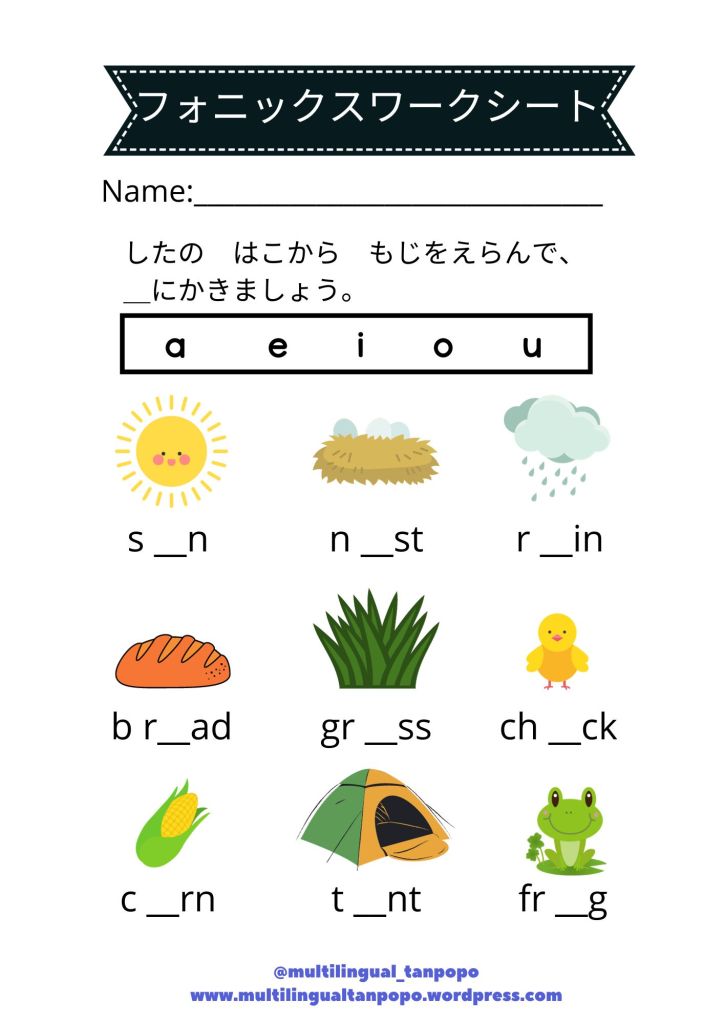
どんな言語でも、コツコツ学ぶのが大事ですね。こちらの初級レベルの英語のワークシートはアルファベットを覚えれば、5分程度の問題です。

プリント用のファイルはこちら

そして、単語とスペルを練習しながら、発音も練習しましょう。英語の「a,i,u,e,o」の発音は日本語の「あ、い、う、え、お」と異なり、バリエーションが多いです。例えば、「car」の「a」は日本語の「あ」と全く同じ音ですが、「cap」の「a」はまた別の音になります。発音の確認はカタカナ読みではなく、英英辞典で確認するのをお勧めです。例えばこちらのCambridge Dictionaryで調べたい単語を検索すれば、単語の隣にスピーカーマークがでてきますので、マークをクリックすると、正しい発音が聞くことができますよ。

Keep practicing and happy learning!

Uncategorized

Welcoming fall

こんにちは!Konnichiha! Hello!

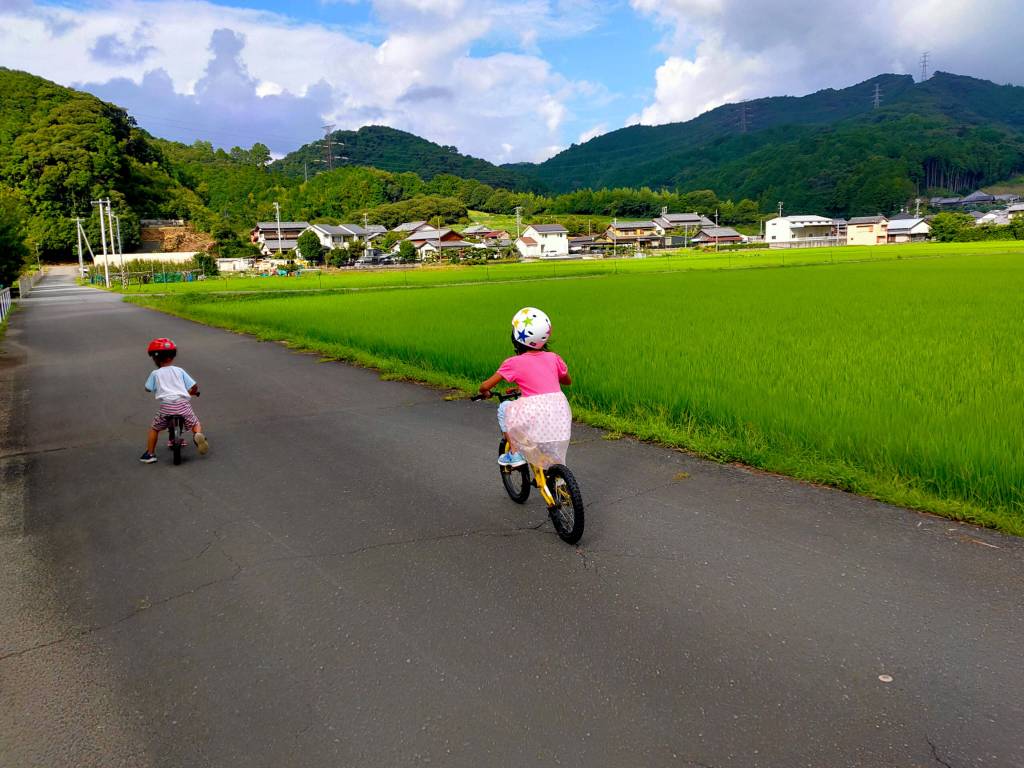
Summer is about to end, so I try my best to get enough sunlight on sunny days in the morning or evening while it lasts. I always bring either all of my kids or only my littlest one when I do so. My three-year-old son is getting better and more confident riding his Strider, so when he’s not cycling with his Papa and sister, he rides slowly next to me and his little brother. Our house is surrounded by paddy fields, tea plantations, a river, and forests. There are not many vehicles running on the road or on small streets like in the pictures below, so it’s quite safe for our children to ride on their bicycles.

Since the season is transitioning to fall, there are so many chestnuts scattered under the trees around our house. I love chestnuts! I think the texture is almost similar to sweet potato, but it has a different aroma.

I’ll post more pictures of fall in our town! For now, here are some takeaways for you.

Summer 夏 なつ

Fall/autumn 秋  あき

Chestnut 栗 くり

Mou sugu natsu ga owarimasu (Soon summer will be over)

もうすぐ夏が終わります。

Mou sugu aki ni narimasu. (It’s almost fall)

もうすぐ秋になります。